Showing posts with label Drama. Show all posts

Sunday, April 25, 2021

The Father (2020)

 Anthony Hopkins gives what may be the most intimate, subtle, and finest film performance of his career. 

Bravo! Bravo! 


Saturday, March 06, 2021

Judas And The Black Messiah (HBO Max, 2021)

As relevant now
A struggle as it was then
Just less obvious


I Care A Lot (Netflix, 2020)

In addition to the kayfabe culture, "turns" were what made pre-Vince professional 'rasslin' great. Face turns -- when villains became the good guys -- were fun, but it was heel turns that were the most exciting. 

When your favorite good guy went bad it hurt, man. It hurt deep into your soul.  

Smart marks could often see a turn coming;. Weeks before, the blonde-haired good guy started showing dark roots, or the villain who always cheated to win gets over by pinning his opponent in the middle of the ring. Most -- but not all -- turns were predictable: fans were never surprised to see Ric Flair turn, but we were shocked when Hulk Hogan joined nWo.

I Care A Lot seemed to have more heel turns in two hours than World Championship Wrestling had throughout the '80s. The turns were fun to watch, and I didn't see any of them coming. 


Sunday, February 21, 2021

Nomadland (Hulu, 2020)

 The coal trucks were driven off the mountain and past my house in a predictable order. It was an order determined, I guessed, by how far their destination was from the tipple. 

The red truck was my favorite. For weeks, during the summer of 1975, I hid behind a bush near the road and waited for that truck to drive by. At each pass I'd jump from behind the bush and use a pretend-gun stick to shoot at the driver who would pretend-shoot back. I'd stagger as if hit, then fall backward onto the grass as he blasted his horn in triumph. 

We carried out this routine every single day, every single pass. Until suddenly we didn't. The red truck -- and all the other trucks, too -- one day just stopped driving by. 

It was my first lesson in how our lives and livelihoods are controlled by others. Especially by those who have the power that comes with big money. The sort of money that can pay a guy to haul coal until it's no longer profitable to do so, and the sort of power that allows The Man to not worry about how a trucker will feed his family after the coal mine is closed and his job is terminated. 

ChloĆ©  Zhao's Nomadland reminded me of that trucker and others I've known who are forced to alter their lifestyle and reimagine their dreams because the work they carried out for most of their lives was no longer useful to The Man. That's the context behind this movie: the main manufacturing company in Empire, Nevada shuts down, forcing hundreds of employees to relocate and killing the town of Empire.  Widowed Fern chooses to become a van dweller, a nomadic lifestyle in which people travel from job to job while living in their vehicle. Fern and others form a loose-knit community, and run into each other time and again as they travel their circuitous route. 

Members of this community refuse to say "goodbye" when they split up. Instead, they'll "see you on down the road." 

Nomadland is beautifully shot, with Academy Award-worthy performances by Frances McDormand and David Strathairn. Director Zhao is patient and allows the story to naturally unfold. While the film is not politically themed,  I couldn't help but think of it from that perspective. Is the nomad lifestyle one that's chosen through free will, or is it forced upon people who are marginalized in society? 

Is Fern living this lifestyle because she loves it, or because she has no other choice? 

Considering that question for more than a moment is a waste of time. It doesn't matter why Fern embraced the nomad lifestyle. She did. The beauty of the film is watching as she lives every single moment of her life. This lifestyle doesn't lend itself to waste or want; you live in the moment or you don't survive. 

And perhaps that's a lesson for us all. 

One interesting aspect on Nomadland is that real-life nomads play fictionalized versions of themselves, adding true depth and genuineness. Casting this group allows the peek behind the curtain to feel real, almost as if one is watching a documentary.  I fell in love with Linda May, Swanky, and Bob. They're happy, kind people who care for others in their community. 

Exactly the sort of people I hope to see again some day on down the road. 


Saturday, February 06, 2021

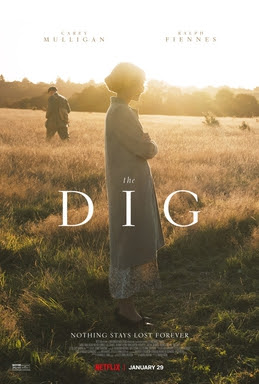
The Dig (2021)

Most things in life that hold any real value are worth the efforts necessary for you to achieve them. 

That's true for finding love, developing friendships, maintaining life quality, and having personal and professional integrity. And, of course, it's also true about finding historic artifacts buried deep within the earth.

All those things are on display in Simon Stone's mostly-true re-telling of the 1939 Sutton Hoo excavation, which uncovered Anglo-Saxon artifacts that changed how we understand our history. 

The Dig is beautifully shot, well-paced, and consistent. Carey Mulligan, Ralph Fiennes, and the rest of the cast deliver top shelf performances. For me, however, the strength of the film rests in the use of metaphor to explain what's going on in the lives of the lead actors. Those comparisons are subtle, yet powerful.

The Dig is well worth your investment.   


Sunday, January 31, 2021

The White Tiger (2021)

I'm not gonna waste your time with a half-assed review, because anything I try to write about this movie will turn out to be less than it deserves. 

Insufficient. Completely inadequate. 

There are only two things you need to know about The White Tiger: 

1. Stop whatever you're doing. Now. Pop some corn, crank up the Netflix, and watch this movie. 

2. Adarsh Gourav will be nominated for, and deserve to win, an Academy Award for Best Actor. 


Monday, December 28, 2020

Ma Rainey's Black Bottom (Netflix, 2020)

Set in Chicago in the 1920s, Ma Rainey's Black Bottom allows the audience to eavesdrop on a group of African American musicians as they prepare to record a song that will make a lot of money for some white people. 

We hang out in the basement and meet the band -- Cutler, Toledo, Levee, and Slow Drag -- as they talk about their past experiences and their dreams of the future. We watch Ma Rainey use the only power she has -- withholding her singing voice -- to bully her white managers until she get what she wants. And we watch those managers do her bidding, no matter how much she frustrates them, because they know a little frustration now will lead to a big payday for them later. 

Even though this movie is set in the 1920s and is based on a play written by August Wilson more than 35 years ago, the themes explored strongly resonate today. Despite a growing diversity in our society, whites today hold power and the privilege that comes with it. If black people have some power to wield, it's because whites recognized that it benefited whites and allowed it to happen. 

Temporarily. 

The audience witness the characters in Black Bottom recognize that truth, and sympathize with each as he or she struggles to deal with it. 

Viola Davis is wonderful in the supporting role of Ma Rainey. Ma's hard to like -- she's a bully, and she comes off as selfish and arrogant. But Davis pulls back the curtain to let the audience in on how and why she behaves that way, which makes her relatable to the viewer. The star of the film is Chadwick Boseman. His turn as Levee is his final performance before dying from colon cancer in August, 2020. 

This role may well have been his finest. 

Levee is ambitious but filled with rage about how he's treated in a white majority society. He has a right to be: he's lived a hard 32 years of second class citizenry, and he's seen more than his share of race-based violence and tragedy. Unlike Ma, who makes a lot of money for white men in the recording business, Levee has no power. The rage he feels about his lack of standing grows until it explodes in the next-to-last scene of the movie.

Black Bottom explores the desire for equality and opportunity in our American society. Ma weaponizes it so that she doesn't lose it. Others keep their heads down and adopt an attitude of "that's just the way it is," so that they can earn a living. Some act out against that reality, and suffer tragedy as a result.

Ma Rainey's Black Bottom is a well crafted, well acted drama that will get some Oscar buzz whenever the post-pandemic Oscar buzz happens. And the buzz will be well deserved. 


Saturday, December 26, 2020

Wander Darkly

In my youth I loved reading books about souls trapped in some netherworld (purgatory, for example, or some respite home-base between reincarnated lives). It was intrigued that a person could live a life full of accomplishments and failures, reflect on and learn lessons from that reflection after death, then move on to another existence. And all the better for it. 

I don't believe in that process, but I want to. 

I sometimes think about that during times of trouble. I'll retreat and pause, and consider: "If this is part of my end-of-life review, what will I learn from it?" On occasion the answer is profound and life changing; most times, however, I give it a shoulder shrug and forget about it before my second cup of coffee. 

Wander Darkly -- like the Ryan Gosling flick Stay from 2005 -- is sorta kinda about a life review. Written and directed by Tara Miele (fans of the TV Arrowverse will recognize her name) Wander Darkly is inspired by a real life event that happened to Miele. The plot is a tightly written puzzle, and the acting is superb. Although the movie is impossible to discuss without treading into spoiler territory, I was deeply affected by watching Sienna Miller work through her mounting confusion. 

It forced me to think about my life decisions and actions. And I need that from time to time. 

Especially with 2021 just around the corner. 


Friday, December 18, 2020

Blackbird (2019)

 I'm terrified of dying. 

The fear isn't about whether there is an afterlife. I don't fear pain or discomfort, or what will happen to my body after my death. (Although neither being lowered into the ground or being burned to ashes sound inviting as options, do they?) Most of those things are out of my control and fearing them serves no purpose. 

I fear the space that exists between (1) when I know death is imminent, and (2) when I draw my last breath. 

In that short few moments will I have regrets? Will I be frightened? If I'm surrounded by friends and family will I have the time and ability to tell them how much I love them? 

You know, in a way that's more powerful than I've ever said it before. 

This life-long fear is why I was eager to watch Blackbird. Watching Lily (played wonderfully by Susan Sarandon) organize and orchestrate the final weekend of her life moved me. It was painful to watch as the final reunion she had with family and friends -- a weekend she wanted to be perfect - unraveled and became something less than that. The audience feels sorry for her until it realizes that imperfection is human; it's what happens when people respond genuinely to distress, anxiety, and fear.

And that imperfection made Blackbird even more beautiful. 

This Roger Michell-directed movie isn't for everyone. But if you want to reflect on your own life and mortality, Blackbird is for you. 


Friday, November 27, 2020

Let Him Go

Sometimes the best way to describe a movie is to suggest what it's not. 

There are no capes or magic powers in Let Him Go. There are just two good-hearted and determined people willing to do what's necessary to protect their grandson. 

There are no scenes of gratuitous violence and gore. The violence and limited gore shown seems genuine and appropriate. 

There is no Terminator-type ending where the villain will be back in endless sequels. The ending wraps it all up well, and is pretty much how an event like this would and should play out.

Let Him Go is simple but powerful. Absurd but sincere. Small with wide appeal. The sort of movie that forces you to consider if you'd make the same decisions as Kevin Costner and Diane Lane if you found yourself in their circumstance. 

Or, would you let him go?


Tuesday, March 17, 2020

Stan & Ollie

I grew up on a healthy dose of Stan Laurel and Oliver Hardy.

You know, Laurel & Hardy. Stan and Ollie. The "Here's another nice mess you've gotten me into!" guys. (By the way, it is "nice," and not "fine," as some mistakenly quote.)

It wasn't that I wanted to watch the comedy duo. I mean, they're fine and all, but I wouldn't have scheduled my day around one of their films. Mostly I watched them because I had to. Where I grew up in the 1970s -- in south-central West Virginia -- I could pick up only a couple of channels with our TV antenna. So, I know it was either the local PBS station or WOAY that fed me fed me a healthy helping of Laurel & Hardy shorts, hours of The Three Stooges, episodes of the Little Rascals, and a bunch of western serials.

I liked the Stooges best. But Laurel & Hardy were a close second.

Most interesting to me about Laurel & Hardy was the absurdity of their symmetry. The two characters are strikingly different, especially in their physical presentation, yet they often mirrored each other in movement. And they did this with impeccable timing and precision.

Watching them was like watching a ballet (but without the tutus.)

Directed by Jon S. Baird and starring Steve Coogan (Stan) and John C. Reilly (Ollie), Stan & Ollie tells the dramatic story of legends coming to understand their careers are ending. It's difficult for both men to process, and for most of the film they refuse to try. The duo go out on a playhouse tour and push themselves physically and emotionally day after day; not for vanity, it seems, but to remain relevant.

Coogan and Reilly are terrific in their roles. Each seems to channel his character, and both show a wide emotional range during the story arc.

You don't have to know about or even like Laurel & Hardy to enjoy this flick. It is poignant without being sentimental.

Oliver Hardy: "I'll miss us when we're gone."
Stan Laurel: "So will you."


Friday, February 07, 2020

1917

Sam Mendes' 1917 is, without a doubt, the best movie of 2019.

The epic, beautifully directed with a focus on symmetry and in a style that looks like one long shot, tells the story of two solders given a near-impossible task during WWI.

The way in which the story is shot makes the viewer feel included in the journey. We flinch, we grimace, we cry because we experience it along with the lead characters.

1917 should win Best Picture at the 2020 Academy Awards, and Mendes deserves the Best Director Oscar.


Sunday, March 08, 2015

Foxcatcher

During high school in the early 1980s, that dark period in human history just prior to the modern Information Age, we kids spent a lot of time sitting around and talking.

Seriously, Millennials. It's true.

My friend Jamie and I dated sisters. We spent a lot of time together at their house and pretended to talk to each other, even though our true motivations were focused elsewhere.  Our conversations were superficial, themed mostly on sports and girls. Jamie was a high school wrestler. I wasn't.

We had little in common other than really liking sisters.

Most days, during lulls in our conversation, Jamie would say: "Let me put you in a banana split." I'd refuse the offer, for several reasons. One of the most important reasons is because the amateur wrestling move known as the "banana split" looks like this:


Despite my "no, thanks," Jamie would laugh, jump on top of me, and contort my body into shapes not intended by intelligent design. After only a few seconds I'd tap out. Jamie and his girlfriend would laugh, and I'd pretend not to me embarrassed.

Wrestlers don't seem to mind physical intimacy. Many, I think, seek it out.

Foxcatcher, directed by Bennett Miller, is really a movie about physical intimacy. Wrestlers in the movie compete with a physical intimacy that's comparable to ballroom dance -- early scenes of the Schultz brothers practicing basic moves on each other demonstrate the grace and elegance of highly trained athletes. John du Pont (the role that will transform Steve Carell's career) longs for physical intimacy with his mother and the wrestlers he recruits, but doesn't understand how to achieve either. And it was an act of physical intimacy -- the moment when du Pont slapped the face of wrestler Mark Schultz -- that dramatically and forever altered the lives of all three main characters.

I enjoyed Foxcatcher for the brilliant acting of the main cast. The tragic real-life story, however, made me feel so uncomfortable and ill-at-ease I wanted to tap out.

Again.

Saturday, February 21, 2015

The Theory Of Everything

I don't recall when I first became aware of Dr. Stephen Hawking. Maybe it was in the late 1980s, when he first published A Brief History of Time. It was likely a bit later, however, as I tend to discover grand works of science and art later than most.

I'm too busy reading comic books, you know.

It feels as though Hawking has always been around. Always been a part of the popular culture. Always been a part of my life. But aside from knowing he's brilliant, that he lives with ALS, and that he digs black holes, I've known little about the man.

Until now.

The Theory Of Everything, directed by James Marsh and starring Eddie Redmayne, gives some insight into the brilliant mind of Hawking. The beauty of the flick, however, is that it allows the audience an intimate look into Hawking's resilient soul.  Sure, we know the dude is smart; what we didn't know was how he defied odds with dignity and grace, and that he lived his life with a hopeful determination.

Redmayne is brilliant in the lead role. He gives a blue-collar feel to Hawking as an intellectual youth, and an obvious humanity to the older Hawking as his body becomes fixed and rigid, and as he re-learns to communicate.

I predict an Oscar for Redmayne. His is the performance of a lifetime.

Tuesday, February 17, 2015

Birdman

Hoping to catch most of the Oscar nominated flicks prior to the February 22 red carpet, I purchased a digital copy of Birdman on the first evening it became available.

I'm now forever stuck with one of the most pretentious, esoteric, self-indulgent movies I've ever seen.

To be fair, the actors in Birdman deliver outstanding work, especially Edward Norton. His Mike Shiner -- a dick of a human being who hides his boorish behavior behind a "method acting" label -- is complicated and multi-layered. And  Michael Keaton gives a solid performance as Riggan Thomson, the lead. But the choice to shoot the film as one long, stand alone shot without scene transition and editing was, to me, a fatal flaw.

It was distracting, and felt gimmicky.

The ending of Birdman, during which Thomson crawls out onto an open ledge and jumps, has been much talked about for its existential theme. It caused me to yawn. I half-hoped the camera would pan downward to show us a broken and bloodied Riggan Thomson on the street below.

That's an honest ending for a movie I wouldn't mind owning.

Saturday, February 07, 2015

Nightcrawler

Way back in 2007, when things called "blogs" were a daily read for many, I posted:  My Top 5: Movies That Give Me The Danny Gut.

(I'll let you read the definition of "The Danny Gut" for yourself at this link.)

Anywhoo, The Danny Gut strikes when I love a movie, but it causes me emotional pain or discomfort. I got it watching Glengarry Glen Ross. I got it trying to watch Requiem For A Dream. I nearly died from the disorder watching Death Of A Salesman.

And I got hit with the bug big time while watching Nightcrawler.

Dan Gilroy hit a home run with his directorial debut. Nightcrawler is a masterpiece. Jake Gyllenhaal channels  a little Travis Bickel in his creation of Lou Bloom, a character the audience can empathize with but can't allow themselves to like.

I liked Lou during sporadic moments -- a few seconds here and a few seconds there -- during the flick. And I hated myself for allowing that to happen.

It's that combination that causes The Danny Gut.


Monday, January 19, 2015

Selma


Despite the burdens
That result from leading change
He remained focused.

Living a life that's
Challenging and uncertain,
He remained steadfast.

Faced with doubt and fear
He looked upward and inward
To inspire others

Saturday, January 17, 2015

American Sniper

My pellet gun -- it was a BB gun, truth be told, but "pellet gun" sounds much more dangerous -- was with me constantly during my pre-teen years, as I explored the woods on my family's small farm on weekends. I wasn't a peacenik tree hugger back then; I'd shoot at anything, alive or not.

I wasn't that good of a shot, though, so I rarely wounded or killed anything.

One Saturday, however, I took aim at a Blue jay perched nearby. I was in its space, I suppose, and it was angry. It would circle in the air above me, then dive suddenly toward my head before perching on a nearby limb to watch me and re-calculate its attack.

It was during this brief respite that I cocked my BB gun, aimed, and pulled the trigger.

The pellet struck the bird in the side of the head, killing it instantly. I ran to it, picked it up, and examined it closely. The bird was lifeless, but it was still beautiful. It's colors were vivid: the contrast between the light and dark blue feathers was remarkable. Realizing that I had taken the life of something so beautiful caused me to become sick to my stomach.

I dropped the bird on the ground and ran home. Overwhelmed. Embarrassed. Guilty.

The experience taught me I'm not built for killing. I just don't have the constitution for it, really. Even if faced with a do-or-die situation, I'm unsure I could view another living thing as simply a target to be shot.

Chris Kyle could.

The ability to detach might have caused problems with his marriage, and created challenges with his own emotional health. But Kyle's skill and abilities saved the lives of hundreds of U.S. soldiers in the Middle East.

It's said that those who can do, and those who can't teach. Or, as in this case, those who can't write about it on a film blog.

Thursday, January 01, 2015

Boyhood

Although I didn't write about all of them here -- trying to maintain a movie blog in the days of Facebook and Twitter feels peripheral and quaint, after all -- I saw some tremendous movies in 2014.

Some were great popcorn flicks (I am Groot!), others tear-jerkers ( We are Groot ), and some movies were funny as hell (He said that he may be an... "a-hole", but he's not, and I quote, "100% a dick").

Well, just trust me . . .  I saw more than one movie in twenty-fourteen.

The best of the bunch, however, was Boyhood.

Richard Linklater's Boyhood is, literally, a coming of age story. Filmed with the same cast over a twelve year period, the audience watches Mason Evans, Jr. grow from a 6-year-old child into a man. We're granted an intimate, inside-the-family perspective -- we become the aunt or uncle watching little Mason celebrate and struggle through the milestones of life.

Boyhood will be remembered as an epic achievement in film- mostly because it was filmed over a long period of time. But that's just a gimmick; that alone isn't what makes this movie great.

The movie is great because Linklater patiently and honestly explores the small moments of Mason's boyhood. As we all know, it is those small moments that make us  the adults we become.

Wednesday, October 29, 2014

Gone Girl

From Se7en, and on through Fight Club, Panic Room, and The Girl With The Dragon Tattoo, I've admired the work of David Fincher. His stripped down, stark, in-the-moment narration keeps me riveted to the screen, captivated by the story.

Gone Girl was no different.

Fincher's raw, in-your-face storytelling reminds viewers that we humans have dark, sinister places deep within our souls. And way too often -- to get what we want, especially -- we go there, despite how our actions might affect others. Even others we are supposed to love.

Affleck is fine in his role as Nick Dunne, and Rosamund Pike is brilliant as Amy. But it's the structure of the film, along with the visual tone set by Fincher, that gets the flick across.